






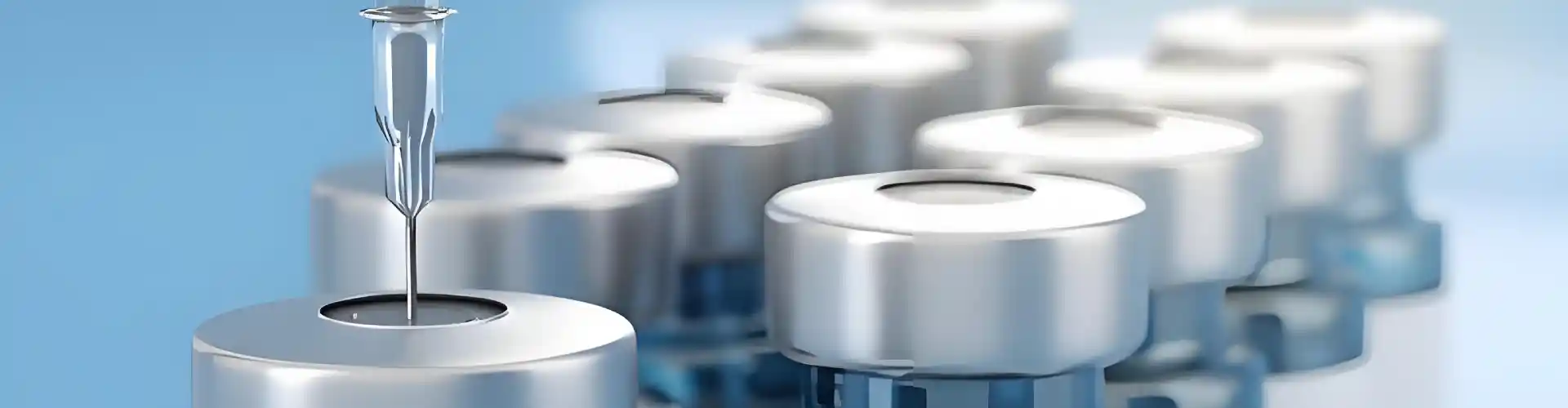
Cleanroom FFU
Hepa Supply Module
PHAP housing with built-in PHF filter tested per EN1822 with point-by-point scanning. Meets SAT with ≤0.01% PAO/DEHS penetration. Silicone jelly seal ensures long-term sealing for frequent disinfection. Camfil Leak-Lead™ design prevents structural leakage.
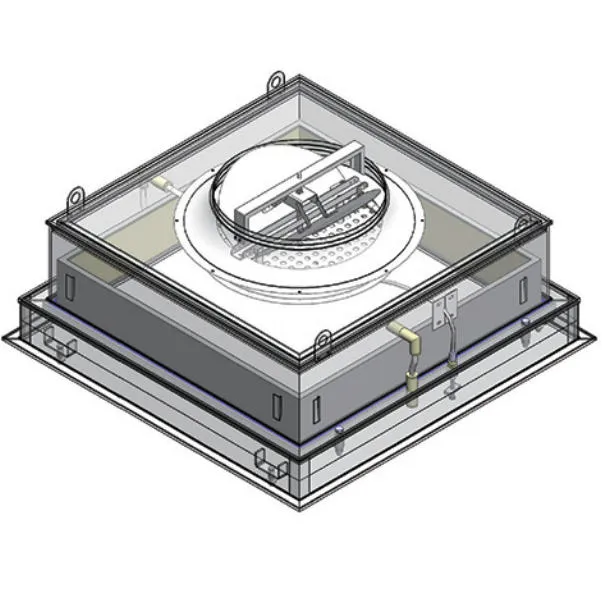
Designed for mission-critical environments across high-precision industries, the Hepa Supply Module is a standardized, field-installable ceiling-integrated air delivery unit. It delivers consistent ISO Class 3–8 airflow performance without requiring custom ductwork or structural reinforcement. Unlike legacy FFU systems, it integrates seamlessly into standard cleanroom ceiling grids—supporting both hardwall and softwall configurations—and maintains uniform face velocity (±5%) across its entire discharge area. Its modular architecture enables rapid deployment, scalable capacity planning, and simplified maintenance access—key considerations for facilities managing multi-phase expansions or strict uptime requirements.
Technical Specifications
The following table outlines core performance and integration parameters verified per IEST-RP-CC001.7 and ISO 14644-3 test protocols:
| Parameter | Value | Notes |
|---|---|---|
| Filtration Efficiency | 99.995% @ 0.12 µm (H14 EN 1822) | Tested with PAO-4 aerosol; certified by TÜV SÜD |
| Airflow Capacity | 300–1,200 m³/h per module | Adjustable via integrated EC motor (0–10 V / Modbus RTU) |
| Face Velocity Uniformity | ≥90% of nominal velocity across full face | Measured at 150 mm downstream per ISO 14644-3 |
| Sound Pressure Level | ≤48 dB(A) at 1 m | At 75% airflow; includes acoustic plenum design |
| Frame Dimensions | 600 × 600 mm, 1200 × 600 mm, 1200 × 1200 mm | Compatible with standard Malaysia FFU ceiling grid spacing |
| Weight | 18–32 kg (varies by size and filter load) | Enables single-person handling and ceiling grid mounting |
| Power Input | 220–240 V AC, 50/60 Hz | IEC 60335-1 compliant; no external transformer required |
Real-World Integration Across Sectors
In semiconductor and electronics manufacturing, the Hepa Supply Module supports localized particle control at lithography and wafer probe stations—reducing cross-contamination risk during tool changeovers. For biomedical labs and aseptic filling suites, its low-turbulence discharge profile meets ASEPTIC processing criteria under PIC/S Annex 1 (2022), particularly where laminar flow integrity must be preserved near open vials or bioreactor interfaces. Aerospace component assembly lines benefit from its vibration-damped mounting system, minimizing micro-movement transfer to optical alignment fixtures. In precision optics and metrology rooms, the module’s thermal stability (<±0.3°C surface temp variation) prevents refractive index drift in interferometric setups. Food & beverage R&D pilot plants use it to maintain microbial limits during sterile media preparation, while automotive battery cell cleanrooms rely on its corrosion-resistant aluminum housing for long-term exposure to electrolyte vapors. Data center server rack zones apply it for targeted cooling and airborne particulate suppression near high-density compute cabinets. Finally, solar cell coating and EV power electronics production leverage its rapid reconfiguration capability during process validation cycles—no need to shut down adjacent bays.
Compatibility with Malaysia Cleanroom Infrastructure
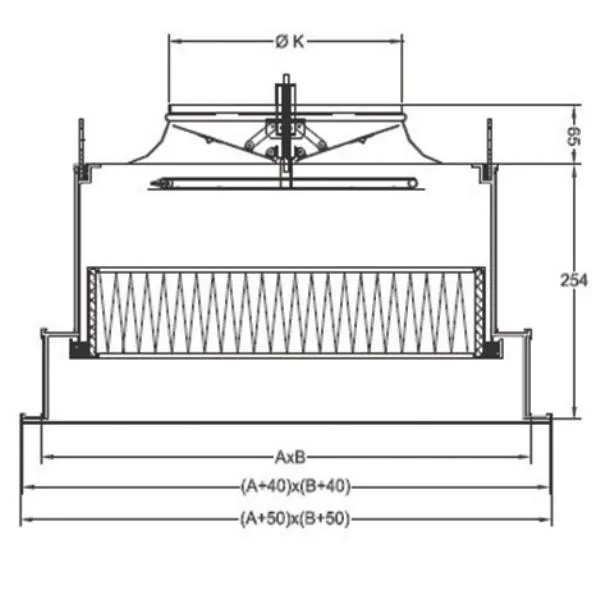
The Hepa Supply Module is engineered for direct compatibility with widely deployed ceiling systems across Malaysian industrial facilities. Its frame geometry aligns precisely with common Malaysia cleanroom manufacturer panel layouts—including those using 600 mm × 600 mm T-bar suspension grids and fire-rated mineral fiber or aluminum composite panels. No retrofitting or bespoke support brackets are required. Integration includes pre-aligned gasket channels for leak-tight sealing, integrated knockouts for sensor wiring, and recessed mounting flanges that accept standard Malaysia FFU ceiling grid hardware. This ensures seamless replacement of aging FFUs or upgrade paths for existing cleanrooms seeking improved energy efficiency and airflow predictability—without disrupting production schedules or violating local fire safety compliance (MS 1082:2021).
Service and Lifecycle Support
Maintenance intervals are extended by up to 40% compared to conventional FFUs, thanks to optimized filter loading algorithms and real-time motor health monitoring. Filter replacement requires only two tools and under six minutes—no ladder staging or ceiling tile removal needed. All firmware updates and diagnostic logs are accessible via standard Ethernet port or optional Wi-Fi module, enabling remote commissioning and predictive service alerts. Spare parts—including H14 filters, EC motors, and gasket kits—are stocked regionally and ship within 48 hours of order confirmation. Technical documentation follows MS ISO/IEC 17025-compliant calibration traceability, and installation checklists align with local AHJ requirements for pharmaceutical and medical device manufacturing sites in Penang, Kulai, and Cyberjaya.
Get a project-specific quote in 24 hours
Send your cleanroom classification, floor area and finish requirements. Our Malaysia-based engineering team replies with a stamped datasheet, fire certificate and pricing — 7×24 technical support by email, phone or WhatsApp.
Chat on WhatsAppWhy is rotating during the shower cycle important?
Standing still creates purification "dead spots" where airflow cannot reach areas like back, underarms, and knees. Active rotation (at least one full turn) with arm movements ensures complete surface exposure
