





Ceiling Grid System
Data Center Ceiling
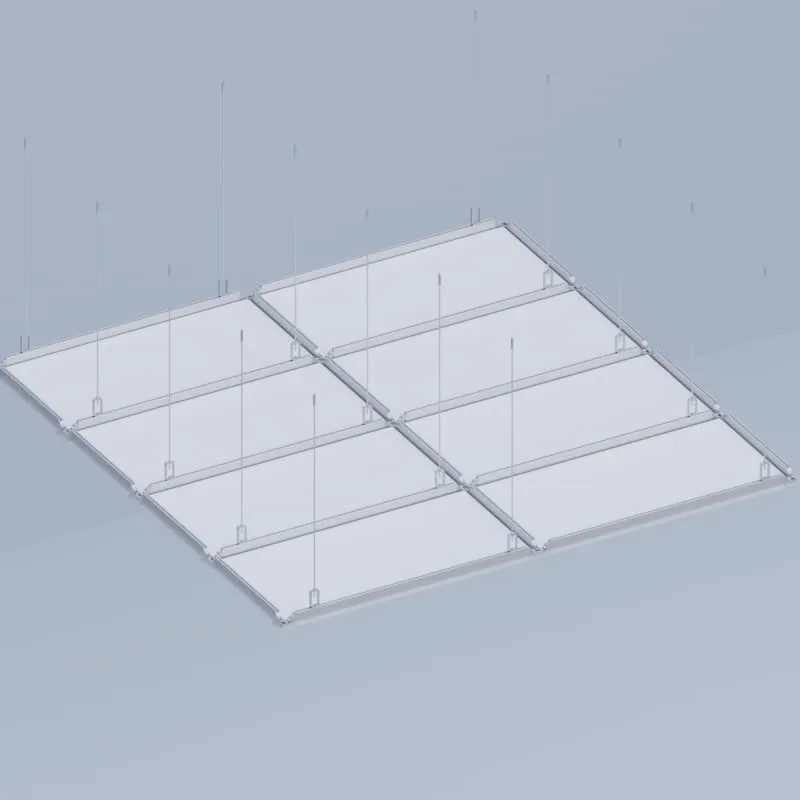
Factory-built aluminum ceiling grid system featuring linear slot profiles for flexible equipment installation.
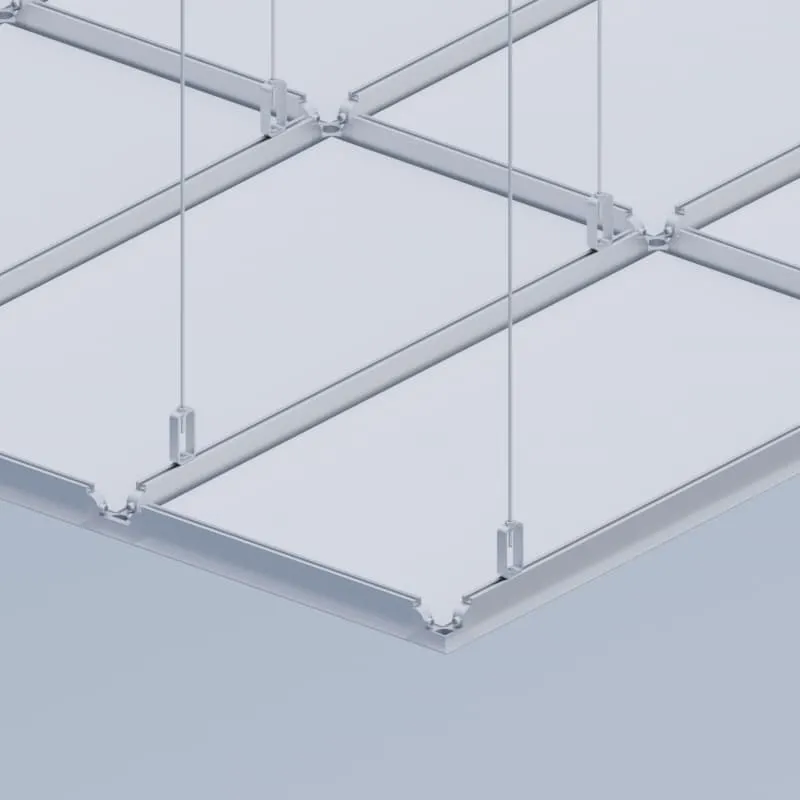
High-performance data center ceilings serve as critical infrastructure components—not merely architectural finishes, but engineered interfaces between mechanical systems, fire safety protocols, thermal management, and operational uptime. In Malaysia’s tropical climate—characterized by high humidity, frequent monsoonal moisture ingress, and elevated ambient temperatures—ceiling systems must resist corrosion, prevent condensation buildup, support integrated cable management, and maintain strict particulate control during installation and service access. This Data center ceiling is designed for Tier III+ facilities where airflow uniformity, acoustic attenuation, and rapid reconfiguration are non-negotiable. It integrates seamlessly with raised floor systems, FM-200 suppression piping, VESDA smoke detection, and modular UPS distribution—without compromising cleanroom-grade integrity at ISO Class 5–8 levels. Unlike generic suspended grids, this solution meets ASHRAE 90.1 thermal bridging requirements and UL 263 fire-rated assembly standards, making it suitable not only for server halls but also for adjacent network operations centers (NOCs), battery rooms, and edge compute pods requiring controlled environments.
Technical Specifications
The following table outlines verified performance parameters validated under third-party testing per IEST-RP-CC002.4 (cleanroom materials), ASTM E84 (surface burning characteristics), and EN 13501-1 (fire classification). All panels undergo 72-hour accelerated humidity cycling (85% RH, 40°C) prior to release.
| Parameter | Value | Standard / Notes |
|---|---|---|
| Panel material | 0.8 mm pre-finished aluminum alloy (AA5052-H32) | Non-shedding, non-outgassing; pass IEST-G-CC1001.2 |
| Core construction | Honeycomb aluminum + closed-cell polyethylene foam | No fiberglass or mineral wool; zero VOC emission |
| Fire rating | Class A (ASTM E84), Euroclass B-s1,d0 | UL 263 listed for 2-hour fire-resistance-rated assemblies |
| Load capacity (static) | 120 kg/m² (uniformly distributed) | Supports overhead cable trays, lighting, and light-duty tooling |
| Acoustic performance (NRC) | 0.75 | Measured per ASTM C423 in reverberation chamber |
| Dimensional tolerance | ±0.3 mm per 1,200 mm length | Ensures flush fit across Data center ceiling grid spans up to 3.6 m |
| Cleanroom compatibility | ISO 14644-1 Class 5 compliant surface finish | Electropolished edges; no exposed fasteners in occupied zone |
Integration Across Critical Environments
This Data center ceiling system is deployed where environmental control intersects with infrastructure resilience. In semiconductor fabs supporting Malaysia’s growing backend assembly and test (OSAT) ecosystem, it enables contamination-free access above EUV lithography tooling zones without disrupting ISO Class 3 laminar flow. For biopharma cleanrooms housing aseptic fill-finish lines, the ceiling supports VHP-compatible gasketed panel seals and integrates with HEPA/ULPA ductwork without thermal bridging-induced condensation—a known risk in Kuala Lumpur’s humid conditions. Aerospace MRO facilities use the same platform to house calibrated laser trackers and coordinate measuring machines (CMMs), where vibration damping and dimensional stability over temperature swings (25–35°C diurnal range) are essential. In food-grade cold storage hubs and EV battery module assembly lines, the non-porous aluminum surface resists microbial adhesion and withstands repeated sanitization cycles using quaternary ammonium or hydrogen peroxide vapor. As a foundational element of any Malaysia prefabricated cleanrooms project, it delivers repeatable tolerances, rapid dry-fit installation, and full traceability of material certifications—key expectations for audited sectors including FDA 21 CFR Part 11 and ISO 13485.
Modular Cleanroom Partition Interface
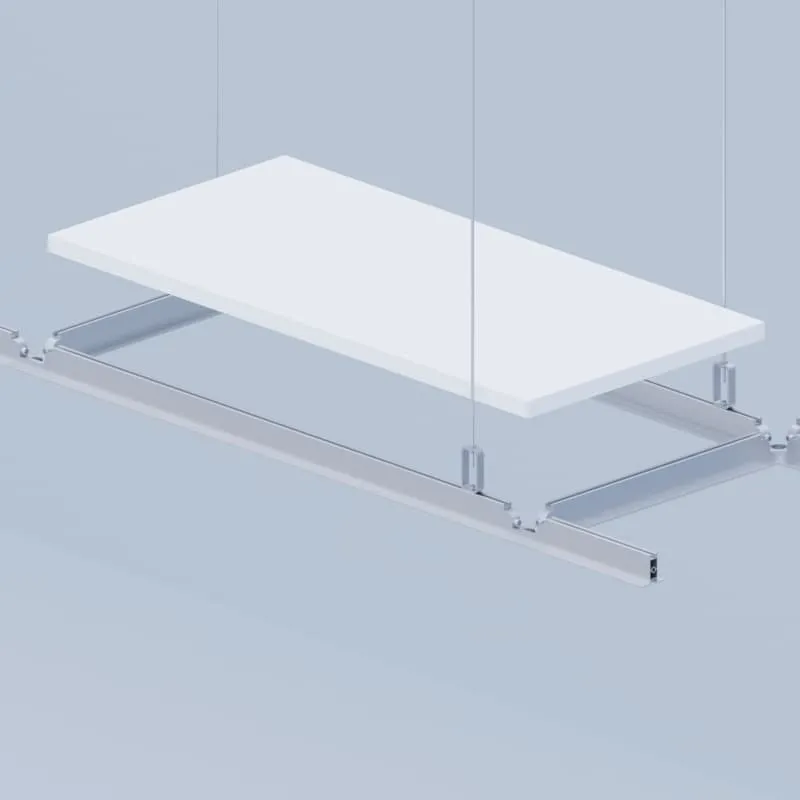
Compatibility with structural cleanroom partition systems ensures continuity of environmental control across zones. The Data center ceiling panel features standardized T-bar interlocking profiles that align precisely with vertical aluminum-framed partitions—eliminating gaps that compromise pressure differentials or permit particle migration. Integrated knock-out slots allow for field-installed conduit entries without compromising panel integrity or fire rating. When paired with a certified cleanroom manufacturer’s wall system, the entire envelope achieves uniform air leakage rates below 0.05 m³/h·m² at 50 Pa differential pressure. This integration is especially valuable in hybrid spaces—such as R&D labs adjacent to production floors—where one data center ceiling system serves both computational infrastructure and analytical instrumentation requiring stable thermal and particulate conditions. Panel joints utilize silicone-free, low-VOC elastomeric gaskets tested for 10,000+ compression cycles, ensuring long-term sealing performance without maintenance downtime.
Chemical Lab Furniture & Environmental Control Synergy
In shared-use facilities—like university microelectronics labs or contract development manufacturing organizations (CDMOs)—the Data center ceiling functions beyond IT cooling. Its rigid, non-reactive surface supports direct mounting of fume hood exhaust collars, gas monitoring arrays, and localized HEPA recirculation units. When installed above chemical lab furniture, the ceiling accommodates dedicated duct runs for acid gas scrubbing and provides grounding pathways for static-sensitive equipment. Panels are compatible with epoxy-coated steel framing and stainless steel cleanroom supplier accessories—ensuring corrosion resistance when exposed to chlorine dioxide sterilization or IPA wipe-down protocols. This cross-functional capability makes it a preferred choice for Malaysian clients pursuing dual-use certification (e.g., ISO 14644 + ISO 15190), where one physical ceiling layer satisfies both computational infrastructure and regulated laboratory compliance requirements. The result is reduced coordination complexity, shorter commissioning timelines, and consistent validation documentation across data center ceilings, data center ceiling tiles, and adjacent process zones.
Get a project-specific quote in 24 hours
Send your cleanroom classification, floor area and finish requirements. Our Malaysia-based engineering team replies with a stamped datasheet, fire certificate and pricing — 7×24 technical support by email, phone or WhatsApp.
Chat on WhatsApp