






Modular Cleanroom Solutions
Cleanroom HPL ceiling system
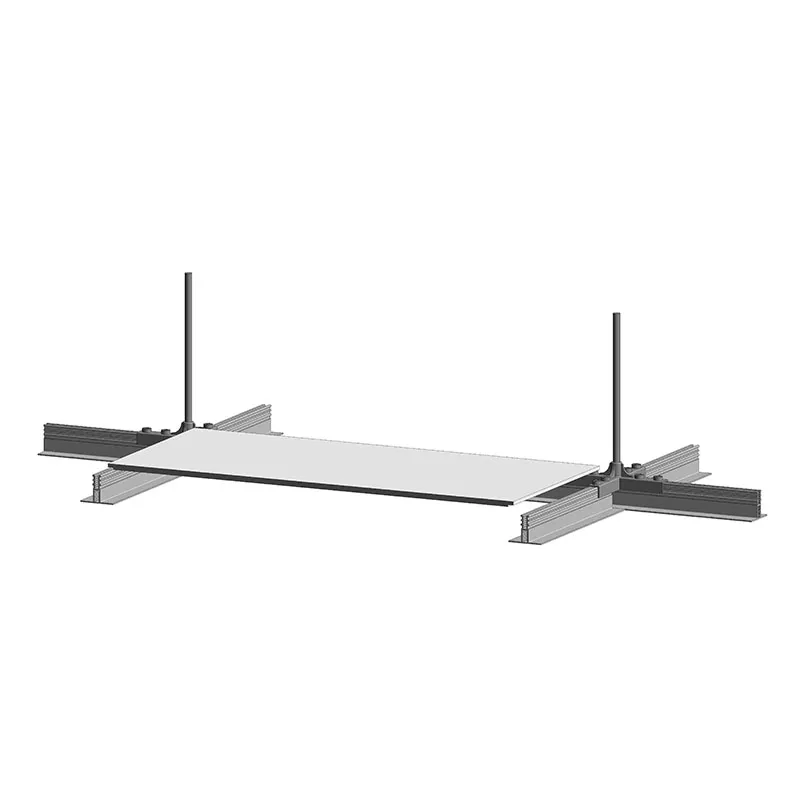
HPL ceiling system is a ceiling system made of HPL plate with the T bar ceiling system combination ceiling system.
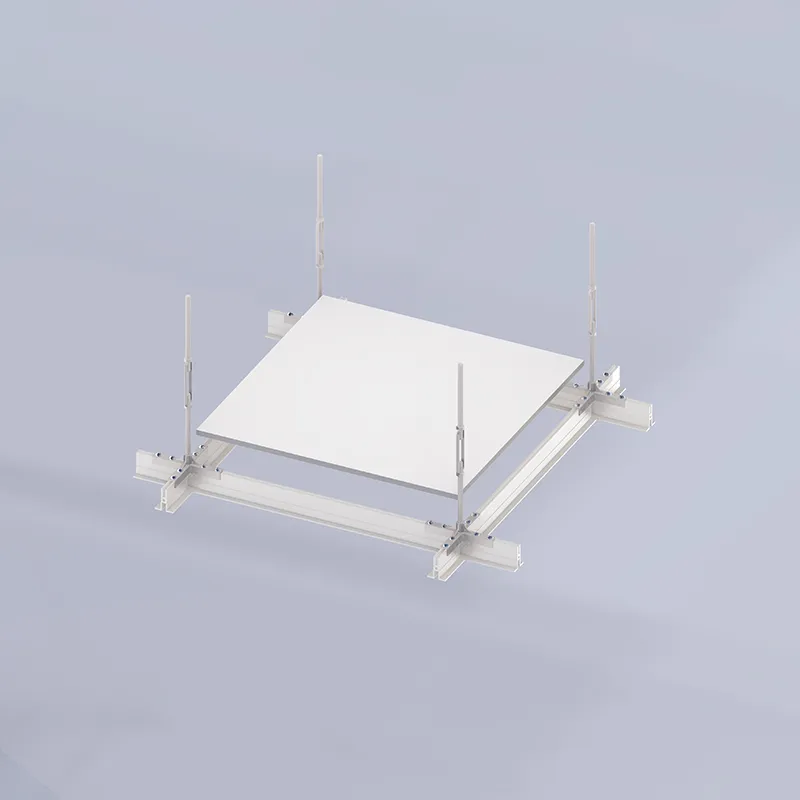
clean room hpl ceiling system: Precision-engineered for High-Performance Environments
With over two decades of hands-on experience designing and specifying cleanroom solutions across semiconductor fabs, biopharmaceutical suites, aerospace assembly bays, and precision optics labs, I’ve seen how ceiling systems silently define operational integrity — not just aesthetics. The clean room hpl ceiling system is engineered to meet the exacting demands of controlled environments where particle control, structural stability, chemical resistance, and rapid reconfiguration are non-negotiable.
This system integrates high-pressure laminate (HPL) panels with a robust, tool-free hanging framework — delivering seamless flatness, zero dust-trapping joints, and full compatibility with FFUs, lighting, sensors, and integrated cabling. Unlike traditional gypsum or aluminum grid ceilings, it avoids field-cutting, adhesive curing delays, or thermal bridging — critical in Malaysia’s warm-humid climate where condensation management and microbial resistance directly impact validation outcomes.
Whether you’re commissioning a new Malaysia prefabricated cleanrooms facility or upgrading an existing ISO Class 5–8 space in Penang, Kulim, or Johor Bahru, this ceiling system is designed for fast, repeatable installation without compromising on compliance. It pairs seamlessly with Malaysia clean room wall panels, forming a unified envelope that meets ASME B96.1, ISO 14644-1, and EU GMP Annex 1 requirements — all while supporting your local project timeline and QA documentation needs. As a trusted Malaysia cleanroom manufacturer, we support engineering teams with full IOM packages, fire-test reports (ASTM E84 Class A), and cleanroom commissioning coordination — no matter where your final assembly occurs.
Technical Specifications & Material Integrity
| Parameter | Specification |
|---|---|
| Panel Core & Surface | Fire-rated MDF core (EN 13501-1 Class B-s1,d0); 1.0 mm phenolic HPL surface (RAL 9003 or custom) |
| Panel Dimensions | Standard: 600 × 600 mm, 600 × 1200 mm, 1200 × 1200 mm; Thickness: 18 mm (panel only) |
| Grid System | Malaysia hanging ceiling grid — extruded anodized aluminum (6063-T5), load-rated to 50 kg/m²; includes adjustable suspension rods (M8, 1.2 m standard) |
| Joint Detail | Tongue-and-groove edge + concealed Malaysia Hiding bar ceiling carrier — achieves ≤0.2 mm visible gap, no silicone required |
| Chemical Resistance | Resistant to IPA, 70% ethanol, diluted hydrogen peroxide (≤6%), and common alkaline cleaners (pH 10.5) |
| Certifications | ISO 9001, ISO 14001, SIRIM QAS certified; compliant with BS EN 438-2 for HPL performance |
| Compatibility | Integrates with FFUs (up to 610 × 610 mm), LED troffers (1200 × 300 mm), VAV boxes, and sensor mounts; supports Modular cleanroom ceiling panels retrofit kits |
Real-World Integration Across Critical Industries
In semiconductor front-end facilities in Malaysia, ceiling integrity directly impacts yield loss from particle redeposition. Our Malaysia HPL ceiling eliminates micro-cracking at panel edges — a known source of silicon dust generation during wafer handling. Paired with Malaysia modular cleanroom systems, it enables rapid zoning: e.g., ISO 4 photolithography bays adjacent to ISO 7 packaging lines — all using the same ceiling architecture, reducing spare-part complexity.
For biologics manufacturing, the hpl ceiling of clean room meets strict cleaning validation protocols. Its non-porous surface withstands repeated CIP/SIP cycles without delamination — unlike PVC or painted metal. When combined with Malaysia clean room wall panels, the full envelope achieves ≤0.1 CFU/m³ in Grade A zones when paired with appropriate airflow design.
Aerospace composites labs rely on stable thermal and humidity conditions. The low moisture absorption (<0.1% by weight) and dimensional stability (±0.05 mm/m after 72h @ 85% RH) of these hpl ceiling panels prevent warping or joint separation — eliminating costly re-leveling during environmental qualification.
Data centers housing AI chip test rigs require electromagnetic quietness and vibration damping. The mass-loaded HPL panel + tuned aluminum grid reduces resonance transmission from overhead AHUs — supporting sensitive metrology tools without additional acoustic isolation layers.
Across food-grade filling rooms, EV battery dry rooms, and optical coating chambers, the system delivers consistent performance — whether specified as part of a turnkey Malaysia hanging grid ceiling solution or as a drop-in replacement for aging mineral fiber grids. As a long-standing Malaysia cleanroom manufacturer, we work directly with your MEP engineers, validating load paths, seismic tie-downs, and fire-stopping interfaces — ensuring what’s drawn on paper performs identically on-site.
Get a project-specific quote in 24 hours
Send your cleanroom classification, floor area and finish requirements. Our Malaysia-based engineering team replies with a stamped datasheet, fire certificate and pricing — 7×24 technical support by email, phone or WhatsApp.
Chat on WhatsApp