






Cleanroom Sandwich Panels
Clean room Ceiling panel system
The clean room ceiling panel is an important part of the clean room system. It is usually used in clean room projects where the cleanliness level is relatively high, for example, Class 100, Class 1000, 100000. It is widely used in the electronics industry, chemical industry, military industry, etc.
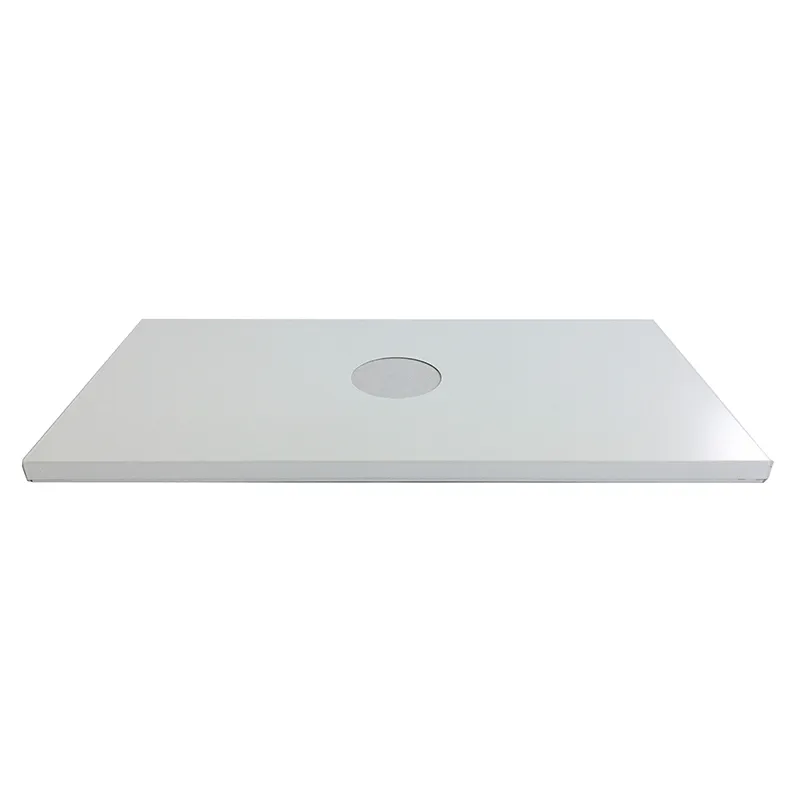
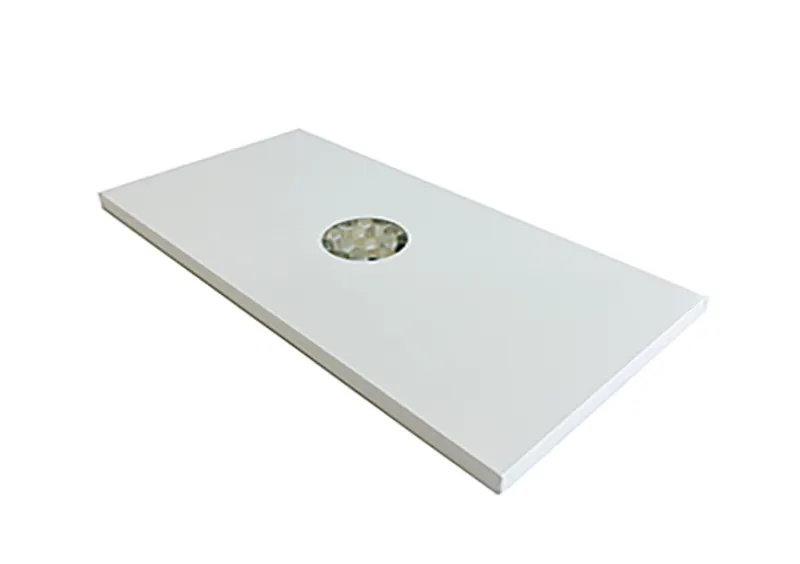
Clean room Ceiling panel system: Precision-engineered for mission-critical environments across Malaysia
With two decades of dedicated experience in cleanroom design and delivery, we serve engineering teams across Malaysia’s most demanding sectors — from semiconductor fabs and biopharmaceutical production facilities to aerospace assembly lines, optical labs, food-grade processing plants, EV battery manufacturing hubs, and hyperscale data centers. Our Clean room Ceiling panel system is not a generic off-the-shelf solution. It is a fully integrated, field-proven ceiling platform engineered to meet ISO Class 3–8 requirements while supporting stringent operational, regulatory, and lifecycle demands.
Unlike conventional suspended ceilings, our system features a seamless Hiding bar ceiling architecture — where structural support rails are fully concealed behind the panel surface. This eliminates shadow traps, simplifies cleaning validation, and ensures uninterrupted airflow integrity beneath FFUs and laminar flow hoods. The Hiding bar ceiling of cleanroom design also enables rapid reconfiguration: panels lift cleanly for filter changes or sensor access without disturbing adjacent zones. For industries like biomedical manufacturing or semiconductor packaging — where particle shedding and maintenance downtime directly impact yield — this detail matters at scale.
We partner closely with Malaysian engineering contractors and facility owners as a trusted Malaysia cleanroom manufacturer, offering full technical documentation, on-site commissioning support, and compliance alignment with MS 1785, ISO 14644, and local GMP/NEBB guidelines. While our production facilities are globally distributed, all systems shipped to Malaysia undergo pre-assembly verification, material traceability tagging, and humidity-controlled packaging — ensuring consistency whether installed in Penang’s wafer fabs or Johor’s life science parks. Our Malaysia prefabricated cleanrooms and Malaysia modular cleanroom systems integrate seamlessly with existing building infrastructure, reducing on-site labor by up to 40% versus stick-built alternatives.
For wall integration, our ceiling system pairs precisely with our Malaysia clean room wall panels, enabling monolithic transitions at perimeter joints and eliminating thermal bridging. And for high-traffic or washdown environments — such as pharmaceutical isolators or food processing clean zones — we offer an optional hpl ceiling variant: durable, non-porous, and certified to EN 438-3 for chemical resistance and fire performance (Class B-s1,d0). The HPL ceiling Design maintains the same concealment logic but adds abrasion-resistant surfacing ideal for frequent disinfection cycles.
Technical Specifications & Material Options
| Parameter | Standard Configuration | HPL Reinforced Option | Notes |
|---|---|---|---|
| Panel Core | Aluminum honeycomb + PU foam (density: 42 kg/m³) | Aluminum honeycomb + HPL-faced PU core | Zero VOC emission; compliant with ISO 14644-8 Annex D |
| Surface Finish | Electrostatically applied epoxy-polyester coating (gloss: 20–30 GU) | High-pressure laminate (HPL) per EN 438-3, 1.0 mm thick | HPL ceiling panels resist 70% IPA, sodium hypochlorite, and steam sterilization |
| Fire Rating | Class B-s1,d0 (EN 13501-1) | Class B-s1,d0 (EN 13501-1) | Validated per ASTM E84 & BS 476 Part 7 |
| Dimensional Tolerance | ±0.3 mm over 3 m length | ±0.25 mm over 3 m length | Critical for gasket compression and leak-tightness at joints |
| Load Capacity | 120 kg/m² static (FFU + duct weight) | 150 kg/m² static | Supports HEPA/ULPA modules up to 1200×600 mm |
| Ceiling Grid System | Concealed Hiding bar ceiling rail (anodized Al 6063-T5) | Same Hiding bar ceiling Design, reinforced mounting points | Rails ship pre-drilled and labeled; Hiding bar ceiling Factory calibration ensures ≤0.5 mm level variance |
Real-World Integration Across Malaysian Industries
In Malaysia’s expanding semiconductor ecosystem — particularly in Kulim and Batu Kawan — our Clean room Ceiling panel system supports sub-micron photolithography zones where vibration dampening and airborne molecular contamination (AMC) control are non-negotiable. The HPL ceiling of clean room option is specified for wet bench areas due to its resistance to sulfuric acid vapors and photoresist strippers.
For biologics manufacturing in Selangor’s BioValley cluster, the system integrates with isolator sleeves and VHP decontamination cycles. Its smooth, crevice-free HPL ceiling Factory-certified surface passes ATP swab testing consistently below 10 RLU/cm² — a requirement verified during MHRA and FDA pre-approval audits.
Aerospace MRO facilities in Subang rely on the modularity: when upgrading avionics test bays to ISO Class 6, teams reused >90% of existing rails and only replaced panels — cutting retrofit time from 8 weeks to 11 days. Similarly, precision optics labs in Negeri Sembilan use the prefabricated modular cleanrooms framework to achieve in situ thermal stability (±0.3°C) via integrated thermal break detailing — referenced at prefabricated modular cleanrooms.
Even in regulated food production — such as halal-certified dairy filling lines in Perak — the system meets JAKIM and MAF requirements for non-toxicity, cleanability, and corrosion resistance. No silicone sealants are used at panel joints; instead, EPDM gaskets with NSF/ANSI 51 certification ensure compatibility with CIP/SIP protocols.
Whether you're specifying for a new 200 MW data center cold aisle in Cyberjaya or scaling sterile fill-finish capacity for mRNA vaccine production, our Clean room Ceiling panel system delivers repeatable performance — backed by 20 years of regional project data, third-party cleanroom certification reports, and direct engineering collaboration. Let us support your next cleanroom build — with clarity, compliance, and zero compromise on execution.
Get a project-specific quote in 24 hours
Send your cleanroom classification, floor area and finish requirements. Our Malaysia-based engineering team replies with a stamped datasheet, fire certificate and pricing — 7×24 technical support by email, phone or WhatsApp.
Chat on WhatsApp- 1 What is the proper procedure for using an air shower?
- 2 What Are the Core Materials and Specifications for Clean Room Panels?
- 3 How to Identify Reliable Manufacturers and Suppliers for Wall Systems?
- 4 What Distinguishes Partition Walls from Standard Partitioning Systems?
- 5 Specialized Panels for Green Energy and Solar Film Production?
- 6 Understanding Pricing Factors and Partition System Configurations?
- 7 How to choose the right door for a controlled environment?
- 8 Which wall panels offer the best protection against damage?
- 9 How does air purification impact clean room efficiency?
What is the proper procedure for using an air shower?
Enter, close outer door completely, stand in center, slowly rotate 360 degrees with arms raised for thorough coverage, wait for preset time (15-30 seconds), then open inner door and enter clean area
What Are the Core Materials and Specifications for Clean Room Panels?
Selecting the correct clean room panel material is critical for maintaining ISO standards across industries. Options include rock wool and aluminum. Detailed clean room panel specifications cover thickness, fire resistance, and surface smoothness. High-quality Clean room panels ensure structural integrity while meeting stringent environmental controls required for precision manufacturing processes.
How to Identify Reliable Manufacturers and Suppliers for Wall Systems?
Evaluating clean room panel manufacturers requires assessing certification records and capacity. A reputable clean room panel supplier provides support for integrating the clean room panel wall system into facilities. Teams should verify compliance with international standards before procurement. Proper selection ensures durability and minimizes maintenance costs across aerospace and automotive sectors.
What Distinguishes Partition Walls from Standard Partitioning Systems?
A clean room partition serves as a standalone divider, whereas a clean room partition wall offers structural support. Advanced clean room partitioning systems allow modular reconfiguration without compromising cleanliness. Solutions are vital for data centers and labs requiring flexible layouts. Installation must adhere to strict sealing protocols to maintain pressure differentials effectively.
Specialized Panels for Green Energy and Solar Film Production?
Facilities focusing on sustainability require clean room panels for green energy manufacturers designed with anti-static properties. Similarly, clean room panels for solar film manufacturers demand ultra-low outgassing materials. Using specialized clean room partition panels ensures product yield remains high. These support rigorous cleanliness classes needed for photovoltaic and battery production lines.
Understanding Pricing Factors and Partition System Configurations?
The clean room panel price varies based on material density, fire rating, and dimensions. A comprehensive Clean Room Partition System includes doors and profiles affecting budget. Comparing different clean room partition systems helps optimize costs without sacrificing performance. Food and beverage sectors prioritize washability, influencing final selection and expenditure planning for construction projects.
How to choose the right door for a controlled environment?
Selecting an aluminum clean room door depends on traffic flow and pressure requirements. Proper Aluminum frame door Design ensures airtight sealing to maintain pressure differentials. For high-traffic areas, automatic clean room doors reduce contamination risks by minimizing physical contact during entry and exit processes in critical zones.
Which wall panels offer the best protection against damage?
Aluminum Clean Room Wall Panels are engineered for impact resistance and easy cleaning. The Aluminium honeycomb gypsum panel combines fire resistance with structural stability. An Anti-fold special panel further enhances durability in corners, ensuring long-term performance without compromising the sterile conditions required for pharmaceutical or electronic manufacturing.
How does air purification impact clean room efficiency?
Effective air purification is critical for maintaining ISO standards. High-quality air filter units remove particulates from the circulation system. Large scale air purification projects require detailed planning regarding airflow patterns. Integration with HVAC systems ensures consistent environmental control. Monitoring particle counts validates effectiveness. Upgrading filtration media enhances safety and product quality within sensitive zones.
