







Ceiling Grid System
Bottom hanging ceiling grid
The Bottom hanging ceiling grid mainly used in the second floor ceiling of the 100-level clean workshop, which can form a clean plenum to ensure that the cleanliness of the internal circulation of the clean room meets the needs of use...
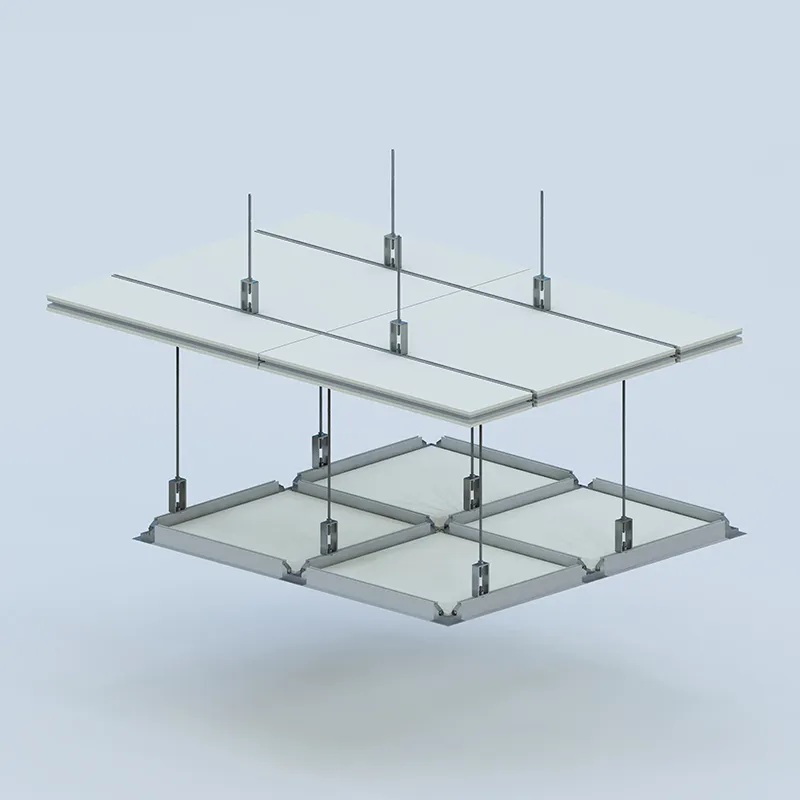
Designed for precision-critical environments across Malaysia’s high-growth industrial sectors, the bottom hanging ceiling grid is a modular, load-optimized suspension framework engineered to support clean room ceiling panels, FFUs (fan filter units), lighting, and integrated monitoring hardware. Unlike top-mounted systems requiring structural reinforcement or complex overhead access, this grid mounts directly to the underside of existing building slabs or secondary support beams—enabling rapid deployment without compromising ceiling height or structural integrity. It delivers consistent flatness tolerance (±0.5 mm/m), vibration-dampened mounting points for sensitive equipment, and full compatibility with ISO Class 3–8 compliant clean room ceiling panel systems. Its design prioritizes serviceability: panels lift vertically without tools; FFU modules slide in/out laterally; cable trays and sensor conduits route cleanly within the grid plane. For semiconductor fabs needing sub-micron particle control or biopharma labs requiring strict humidity and static management, this system eliminates thermal bridging, minimizes particulate shedding during maintenance, and supports seamless integration with HEPA/ULPA filtration infrastructure.
Technical Specifications
The following table outlines key dimensional, material, and performance parameters validated under real-world installation conditions across Malaysian climate zones (high ambient humidity, tropical temperature cycling, and coastal salt exposure):
| Parameter | Specification |
|---|---|
| Grid Material | Anodized aluminum 6063-T5 (15 µm minimum anodizing thickness, ASTM B580) |
| Load Capacity (per module) | 120 kg static / 45 kg dynamic (including FFU + panel + lighting) |
| Standard Module Size | 1200 × 600 mm (custom up to 2400 × 1200 mm) |
| Height Adjustment Range | 120–350 mm below primary structure (adjustable in 10 mm increments) |
| Flatness Tolerance | ≤ 0.5 mm per meter (measured after full panel installation) |
| Fire Rating | Class A (ASTM E84, flame spread ≤25, smoke developed ≤50) |
| Corrosion Resistance | Passes 1,000-hour neutral salt spray (ASTM B117) — suitable for coastal data centers and food-grade facilities |
Real-World Application Across Malaysian Industrial Sectors
In semiconductor and electronics manufacturing, where wafer yield depends on nanoscale contamination control, the bottom hanging ceiling grid enables precise alignment of ultra-low leakage clean room ceiling panels and maintains uniform airflow velocity across photolithography bays. For biomedical labs handling cell therapies or mRNA production, its non-shedding surface finish and sealed suspension joints reduce microbial ingress risk—critical when paired with validated clean room ceiling panel systems. In aerospace component assembly, the grid accommodates vibration-isolated lighting and laser calibration mounts without transmitting floor-borne resonance. Food and beverage facilities benefit from its smooth, crevice-free profile that meets SSOP (Sanitation Standard Operating Procedures) cleaning protocols. Automotive EV battery module lines use it to integrate environmental sensors directly into the ceiling plane—supporting real-time dew point and particle logging. Data centers in Johor and Cyberjaya deploy it to suspend redundant FFUs above server racks while preserving vertical clearance for hot/cold aisle containment. All applications leverage the same core advantage: zero interference with existing MEP routing, minimal ceiling void depth, and field-adjustable leveling—even after HVAC commissioning.
Integration with Malaysia prefabricated cleanrooms
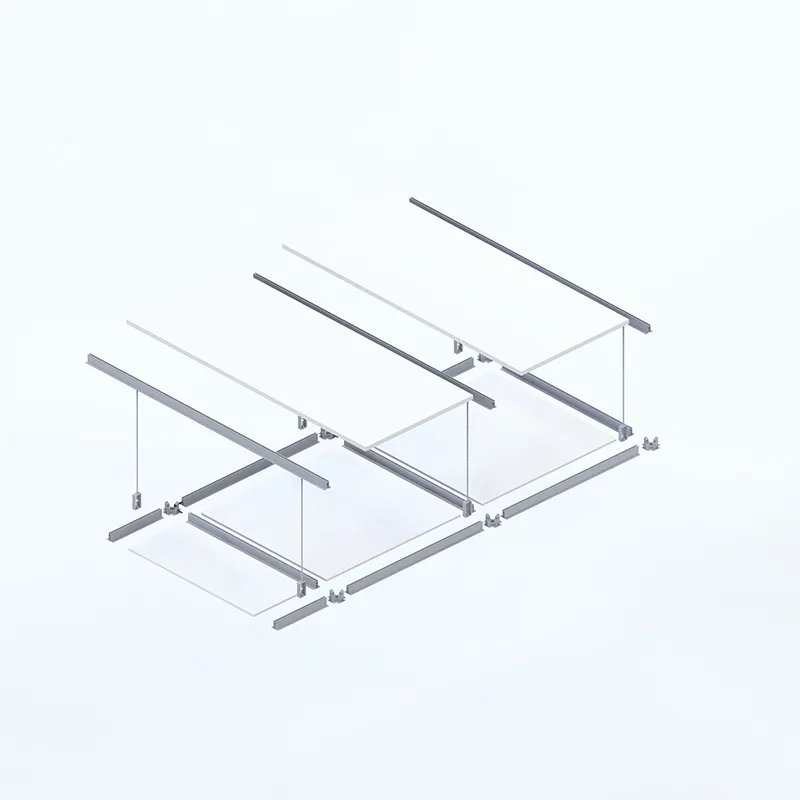
This system serves as the foundational interface between structural envelope and functional cleanroom layer—especially critical for Malaysia prefabricated cleanrooms. Prefab modules arrive with pre-cut ceiling openings, integrated grounding paths, and factory-aligned grid anchor points. On-site, installers secure the grid to embedded sleeves or chemically anchored inserts—eliminating drilling into finished slabs and reducing commissioning time by up to 38% versus traditional suspended systems. Compatibility extends across cleanroom partition configurations: hardwall, softwall, and hybrid designs all interface via standardized perimeter trim and compression gaskets. As a cleanroom manufacturer solution, it ensures repeatable ceiling flatness across multi-bay expansions—essential for GMP-compliant biologics fill-finish suites or tier-IV data hall replication. No special tools or certified riggers are required; standard torque wrenches and digital level apps suffice for QA verification.
Maintenance and long-term performance
Over a 10-year operational cycle in Malaysian facilities, the bottom hanging ceiling grid demonstrates minimal creep or sag—even under continuous 35°C ambient and 80% RH conditions. Its corrosion-resistant finish prevents white rust formation common in humid coastal zones like Penang and Kuching. Routine maintenance requires no full ceiling deconstruction: individual clean room ceiling panels lift vertically using built-in handles; FFUs detach via quick-release latches; LED fixtures unclip without electrical isolation. The clean room ceiling grid system allows panel replacement without disturbing adjacent modules—reducing downtime during biopharma validation requalification or automotive Tier-1 supplier audits. Because the clean room ceiling suspension remains fixed while components change, recalibration of airflow mapping or particle counters is rarely needed. For end users evaluating a clean room supplier, this predictability translates directly into lower lifecycle cost: fewer unplanned shutdowns, consistent ISO classification compliance, and simplified documentation for MDR, FDA 21 CFR Part 11, or MS ISO 14644-1 reporting. Clean room ceiling, clean room ceiling grid, clean room ceiling grid system, clean room ceiling panel, clean room ceiling panels, clean room ceiling suspension, and cleanroom partition all function as interoperable subsystems—not isolated components—within this architecture.
Get a project-specific quote in 24 hours
Send your cleanroom classification, floor area and finish requirements. Our Malaysia-based engineering team replies with a stamped datasheet, fire certificate and pricing — 7×24 technical support by email, phone or WhatsApp.
Chat on WhatsApp